
Make Every Inch Work Harder
The most effective way to make a small bathroom feel larger is to eliminate visual clutter and create continuous sight lines. Large-format tile with minimal grout lines, a curbless shower entry, a floating vanity, and a recessed medicine cabinet can transform a 40-square-foot bathroom into a space that feels twice its actual size — without moving a single wall.
Across Fort Worth, Arlington, and the broader DFW metroplex, thousands of homes were built with compact guest bathrooms and half baths that measure between 30 and 50 square feet. Older neighborhoods in White Settlement and parts of Fort Worth are especially common candidates for small bathroom renovations, with ranch-style homes from the 1960s and 1970s that feature tight, compartmentalized floor plans. The good news is that a thoughtful remodel can make these bathrooms far more functional and visually spacious without adding square footage.
Here are the specific strategies we use on small bathroom remodels across the DFW area, organized from highest impact to finishing touches.
Replace the Tub with a Walk-In Shower
This is the single highest-impact change you can make in a small bathroom. A standard bathtub occupies a 60-inch by 30-inch footprint and creates a visual barrier — the tub wall, the shower curtain or glass enclosure, and the transition from floor to tub all break up the space and make the room feel smaller.
A tub-to-shower conversion reclaims that footprint with a design that flows with the rest of the room. A curbless entry eliminates the threshold entirely, allowing the floor tile to continue uninterrupted from the bathroom floor into the shower. This single detail creates a dramatic visual expansion because the eye reads the entire floor as one continuous surface rather than two separate zones.
For DFW homeowners with only one bathroom, keep in mind that removing the home's only bathtub can affect resale value for families with young children. If that is a concern, consider a compact soaking tub (48 inches instead of 60 inches) or plan the conversion for a secondary bathroom while preserving the tub in the primary one.
Use Large-Format Tile to Reduce Grout Lines
Tile selection has a major impact on how spacious a small bathroom feels. The key principle is straightforward: fewer grout lines equal a cleaner, more expansive look.
Large-format tiles — 12x24 inches or larger — cover more surface area per tile, which means fewer grout joints breaking up the visual field. In a small bathroom, this creates a smoother, less busy appearance that tricks the eye into perceiving more space. We typically recommend 24x48-inch or 12x24-inch porcelain tiles for small bathroom walls and floors.
Additional tile strategies that amplify the effect in compact bathrooms:
- Extend wall tile to the ceiling. Stopping tile at the 48-inch mark (chair rail height) creates a horizontal line that visually chops the wall in half. Running tile floor-to-ceiling draws the eye upward and makes the bathroom feel taller. This is one of the most underused techniques in small bathroom design.
- Match floor and wall tile. Using the same tile on the floor and walls (or at least the same color family) eliminates visual boundaries between surfaces. The room reads as a single cohesive volume rather than a patchwork of different materials.
- Light colors reflect more light. White, cream, light gray, and soft beige tiles reflect ambient and artificial light, making the room brighter and more open. This does not mean every small bathroom has to be white — a warm greige or soft taupe still achieves the effect without feeling sterile.
- Keep grout color close to tile color. Contrasting grout (white tile with dark grout, for example) emphasizes every grout line and creates a grid pattern that visually fragments the surface. Color-matched or close-toned grout lets the tile surface read as a continuous plane.
Install a Floating Vanity
A floating (wall-mounted) vanity is one of the most effective upgrades for a small bathroom. By mounting the vanity off the floor and exposing the tile beneath it, you create visible floor space that makes the room feel noticeably larger.
The effect works because the eye reads the continuous floor line — tile running under the vanity and across to the opposite wall — as uninterrupted open space. A traditional floor-mounted vanity, by contrast, creates a visual block at floor level that shortens the perceived room depth.
Practical benefits of a floating vanity in a compact bathroom:
- Easier cleaning. No awkward crevice between the vanity base and the floor where mold, hair, and dust collect.
- Adjustable height. Wall-mounted vanities can be installed at the height that is most comfortable for the homeowner, typically 32 to 36 inches from the floor to the countertop.
- Open floor storage. The space beneath a floating vanity is perfect for a basket, small stool, or simply left open for a clean aesthetic.
Pair the floating vanity with a vessel sink or an undermount sink to keep the countertop surface clean and uncluttered. In tight spaces, a single-hole faucet also reduces visual noise compared to a widespread three-hole design.
Add a Recessed Niche for Built-In Storage
Storage is the perpetual challenge in a small bathroom. The solution is to build storage into the walls rather than adding it on top of them.
A recessed shower niche provides shelving for shampoo, body wash, and soap without a bulky corner caddy or suction-cup organizer that clutters the space. The niche is framed into the wall cavity between studs and tiled to match the surrounding shower walls, creating a flush, integrated look.
Beyond the shower, a recessed medicine cabinet offers significantly more storage than a standard surface-mounted mirror. The cabinet depth sits inside the wall cavity, so it does not project into the room. From the outside, it looks like a standard framed mirror — but opens to reveal three or four shelves of hidden storage for toiletries, medications, and grooming supplies.
Both of these features require careful planning during the remodeling process because they involve framing within the wall cavity. They cannot be added as an afterthought once the tile is set — they need to be incorporated during the waterproofing and framing phase.
Upgrade Lighting to Open the Space
Lighting has a surprisingly strong impact on perceived room size. A single overhead fixture — the default in most older DFW bathrooms — casts flat, unflattering light and leaves corners in shadow, which makes the room feel smaller.
A layered lighting approach makes a small bathroom feel dramatically more open:
- Vanity sconces or LED bars. Flanking the mirror with vertical sconces or an LED light bar at eye level eliminates shadows on the face and provides even, bright task lighting. This is the most functional upgrade for daily grooming.
- Recessed ceiling lights. Small recessed LED cans (3 to 4 inches) sit flush with the ceiling and provide ambient light without the visual bulk of a hanging fixture. In a small bathroom, one or two recessed cans are usually sufficient.
- Backlit mirrors. An LED-backlit mirror creates a soft halo of light around the mirror's perimeter. This produces a floating, modern effect that visually expands the wall and adds ambient brightness without additional fixtures.
- Shower niche lighting. A small LED strip inside the recessed niche is a subtle luxury detail that also serves a practical purpose — illuminating the shower interior and reducing the closed-in feeling of a small enclosure.
Choose a Frameless Glass Shower Enclosure
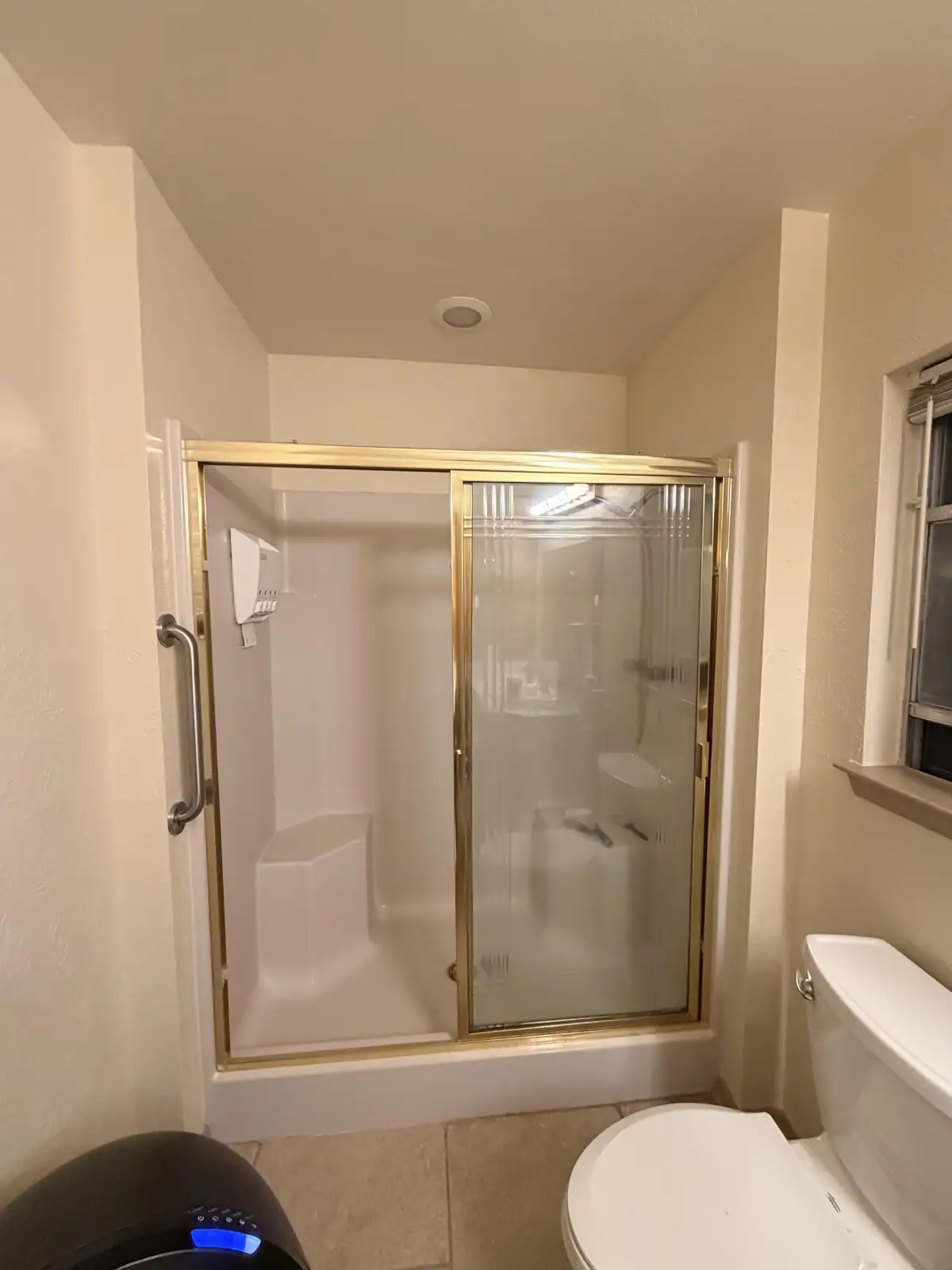
If a fully open curbless shower is not feasible for your layout, a frameless glass panel or enclosure is the next best option for preserving visual openness. Framed shower doors — especially ones with frosted glass or a heavy metal frame — create a solid visual barrier that divides the room. A frameless glass panel is nearly invisible, allowing the eye to travel through the shower space to the back wall.
For small bathrooms, we often recommend a single fixed glass panel rather than a full hinged door. The panel contains water splash without requiring a door that swings into the limited floor space. Combined with a walk-in shower design and proper floor slope toward the drain, a single glass panel delivers a clean, open feel with minimal hardware.
Maximize Vertical Space
In a small bathroom, the walls are your most underutilized asset. Most DFW bathrooms have standard 8-foot ceilings, which gives you roughly 4 to 5 feet of usable wall space above the countertop.
Practical ways to use vertical space in a compact bathroom:
- Tall, narrow shelving. A slim built-in or floating shelf unit between the toilet and the wall (a common dead zone in small bathrooms) can hold towels, toiletries, and decorative items without encroaching on floor space.
- Hooks instead of towel bars. A single towel bar requires 24 to 30 inches of uninterrupted wall space. Individual hooks can be placed closer together, accommodate more towels, and fit in tighter areas — behind the door, on the side of a vanity, or on a narrow wall segment.
- Above-toilet storage. The wall above the toilet is almost always unused. A floating shelf, small cabinet, or recessed shelf unit in this space adds meaningful storage without affecting traffic flow.
Select Fixtures That Fit the Scale
Standard-sized fixtures can overwhelm a small bathroom. Choosing fixtures specifically proportioned for compact spaces makes the room feel intentionally designed rather than cramped.
- Compact toilet. A round-front toilet is about 2 inches shorter from wall to front edge than an elongated model. In a tight bathroom, those 2 inches can be the difference between comfortable clearance and feeling boxed in. Wall-hung toilets go a step further by mounting the tank inside the wall, freeing up even more floor space.
- Narrow-depth vanity. Standard vanities are 21 to 24 inches deep. A 16- to 18-inch-depth vanity provides enough counter and sink space for a guest bath or half bath while leaving significantly more floor area for movement.
- Single-lever faucet. A clean, single-lever faucet takes up less visual and physical space than a widespread design with separate handles. In a small vanity, the streamlined look makes a noticeable difference.
Use Mirrors Strategically
Mirrors are the oldest trick in interior design for making a space feel larger, and they are especially effective in small bathrooms. A large mirror above the vanity — extending as wide as the vanity or slightly wider — reflects light and the opposite wall, effectively doubling the visual depth of the room.
For maximum impact, consider a mirror that extends from the countertop to the ceiling or close to it. This creates a floor-to-ceiling reflective surface that amplifies every other space-enhancing decision you have made (light tile, bright lighting, open shower). Avoid ornate, heavy frames that visually shrink the mirror — a frameless or thin-framed mirror maximizes the reflective surface.
Color and Material Palettes That Work in Small DFW Bathrooms
Material selection plays a defining role in whether a small bathroom remodel feels open and inviting or cluttered and confined. The DFW market offers access to a wide range of tile distributors and stone suppliers, which gives homeowners more options than many other metro areas. Here are the palettes we recommend most often for compact bathrooms in Arlington, Fort Worth, and surrounding communities.
Warm neutral palette. Greige porcelain tile (a blend of gray and beige) on the walls and floor creates a cohesive, warm backdrop that reflects light without feeling stark. Pair it with brushed gold or champagne bronze hardware for a premium look that suits the DFW design aesthetic. This palette works well in guest bathrooms and powder rooms where you want warmth without visual weight.
Cool minimalist palette. White or off-white large-format porcelain on the walls with a slightly darker gray on the floor creates depth and separation without introducing competing patterns. Matte black hardware provides contrast and a modern edge. This combination is especially effective in small master bathrooms where a clean, uncluttered design is the priority.
Natural stone accent palette. A primarily porcelain bathroom with a single accent wall or niche in natural marble or travertine adds visual interest and luxury without overwhelming a small space. The accent draws the eye to a focal point rather than letting it bounce between competing surfaces. We often use this approach in shower remodels where the back wall of the shower becomes the statement feature.
Regardless of palette, one rule applies across every small bathroom renovation: limit the number of different materials to three or fewer. Each additional material introduces a visual transition that fragments the space. A cohesive material palette is the single most important design principle for making a compact bathroom feel considered and spacious rather than busy and small.
Plan Your Small Bathroom Remodel
Every small bathroom remodel requires careful planning because the margin for error is smaller. A fixture placed 2 inches too far in one direction can make the difference between a comfortable bathroom and one that feels cramped. This is why an in-home measurement and consultation is essential before finalizing any design.
At Water and Stone, we have remodeled hundreds of compact bathrooms across Arlington, Fort Worth, and the DFW metroplex. We provide a detailed 3D render during the consultation phase so you can see exactly how your small bathroom will look and function before construction begins.
Ready to transform your small bathroom? Request a free consultation or call us at (817) 631-3269. We will measure your space and show you what is possible.